
Making a difference
Our education programmes successfully reduce prejudice and discrimination and create lasting change. Each year, the University of Kent analyse evaluation data gathered from our programmes to assess the impact of our work.
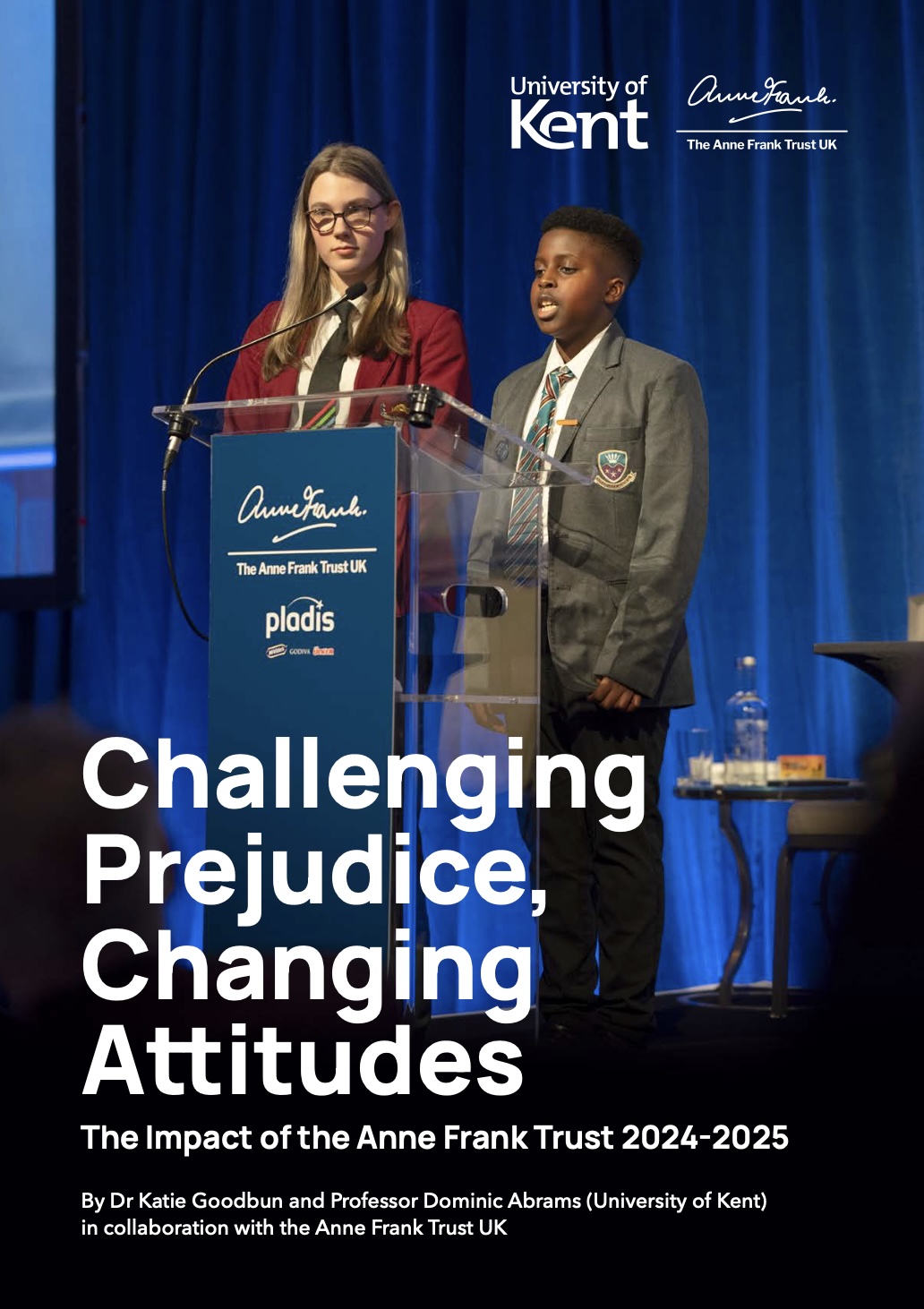
Read the full 2024-2025 impact report here.
How we evaluate
 Young people complete our Contact Star and Workshop questionnaires both before and after participation. These questionnaires are a bespoke evaluation method developed for us by social psychologists at the University of Kent. They measure our attitudes and beliefs toward different social groups.
 Focus groups provide in-depth feedback on the impact of the programme
 Teachers also provide feedback on the changes they have seen in their school after we have worked with students there. Through Key Link Schools we track impact over two to three years.
 Measuring impact on our wider audience. This is harder to measure but is a key objective for us.
Making a difference
Read inspiring stories from the young people who have joined us in the mission to build a world free from prejudice.
Click on a story to find out more:
Ryan’s Story
I think there’s a lot of people that went through the programme that would bully people and this has changed them as well…It’s helped them, they’ve realised that you shouldn’t bully people, it’s made them think differently, it’s made them think through the consequences…Some of them would just shove you about a little bit, like I know a few of them that would shove me about a bit and then, ever since we’ve done that, it’s changed completely. It’s made me a lot happier when I’ve walked around school, like not worrying about someone shoving me or tripping me over.
Ameera’s Story
It’s quite shocking to think that a group of people could be isolated as much as the Jews were but then it’s happening again in society now and people are segregated now. It makes me want to be a part in changing that. It makes me want to have a say in the world and put my point across which is that we are all equal….I’d say amongst young people today, there is a lot of preconceived notions through the media about certain religions. Er, Islamophobia being one in that people believe that Muslims are all the same thing. Not only that but also seeing a lot of gender inequality around me and sort of obviously homophobia. But the Anne Frank Trust is helping show people that certain things are not okay and you have to build up, you have to show tolerance, you have to treat everyone the same.
Maria’s Story
Anne was 13 years old when she went into hiding, the same age as me. The biggest difference between us is that she was born nearly 91 years ago, and yet still 91 years on, people look at me and judge me, the same way they judged her. This is because, now as then, people find it easier to stand by and allow prejudice to go unchallenged. It takes courage to stand up for what is right, and as an Anne Frank Ambassador I am empowered to do this, and to tell you all today to treat EVERYONE how you would like to be treated
Rachel’s Story
For me, the value that underpins everything that Anne believed in is kindness. Kindness is something that can often feel rare in a society that is always trying to look forward, trying to do more, be more, say more, but as Anne urged ‘you can always, always give something, even if it is only kindness’. Anne was full of kindness, happiness, optimism and positivity. We must learn from Anne: learn to be a voice for the voiceless, challenge racism, discrimination and hatred; welcome in those who have been shut out. We must support each other and celebrate difference and think of ‘all the beauty that still remains’.